Pattern library
Free Perler bead patterns you can read without paying for anything
Every chart below is drawn at full size on this page. Each one tells you the grid dimensions, the exact color code and bead count for every color, and how many pegboards the build needs. Open one, look at it, decide if you want to make it.
All patterns
One-board patterns are the ones you can finish in an evening. The 58×58 versions need four boards and several hours, but the fur and the shading actually separate.
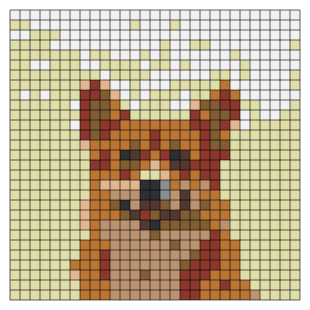 Corgi portrait
Advanced · Perler
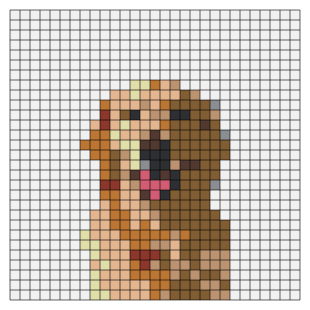 Golden retriever portrait
Advanced · Perler
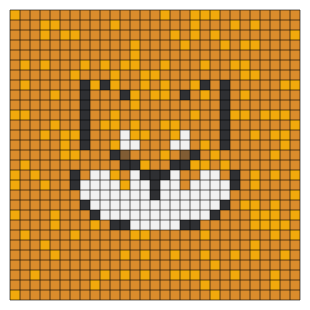 Shiba portrait
Advanced · Perler
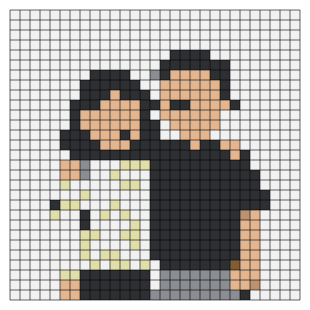 Couple portrait
Advanced · Perler
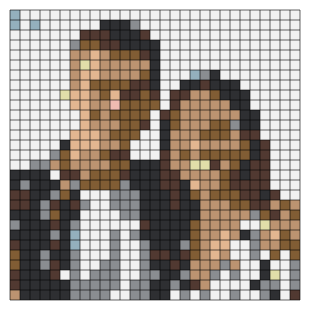 Couple in western style
Advanced · Perler
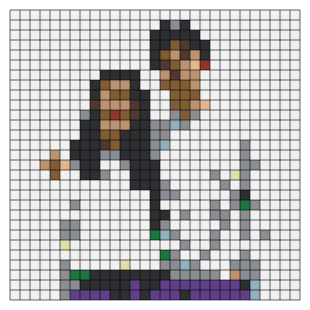 Realistic couple portrait
Advanced · Perler
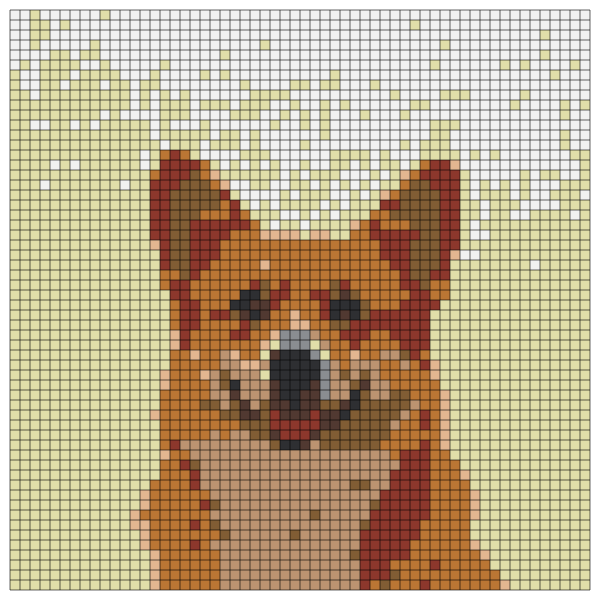 Corgi portrait, large grid
Advanced · Perler
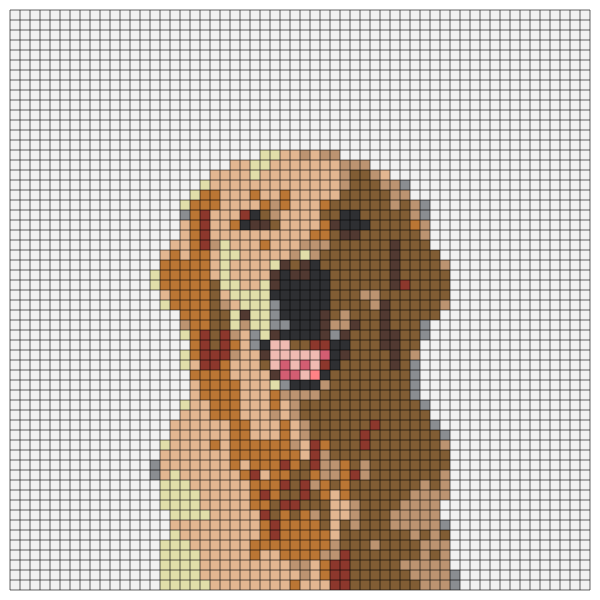 Golden retriever, large grid
Advanced · Perler
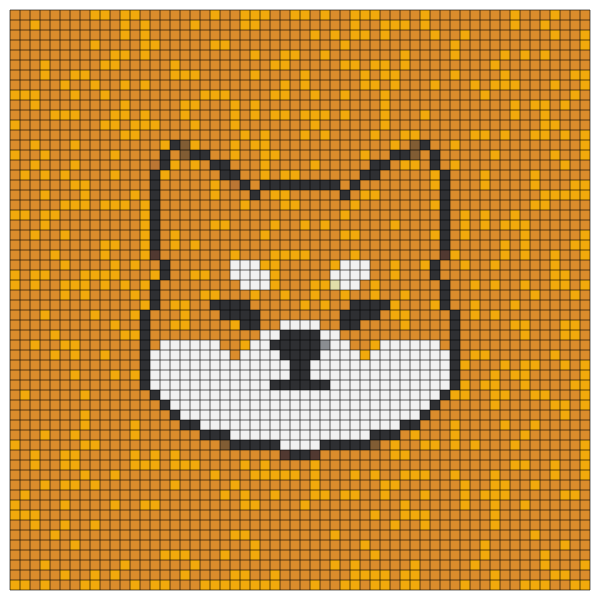 Shiba portrait, large grid
Advanced · Perler
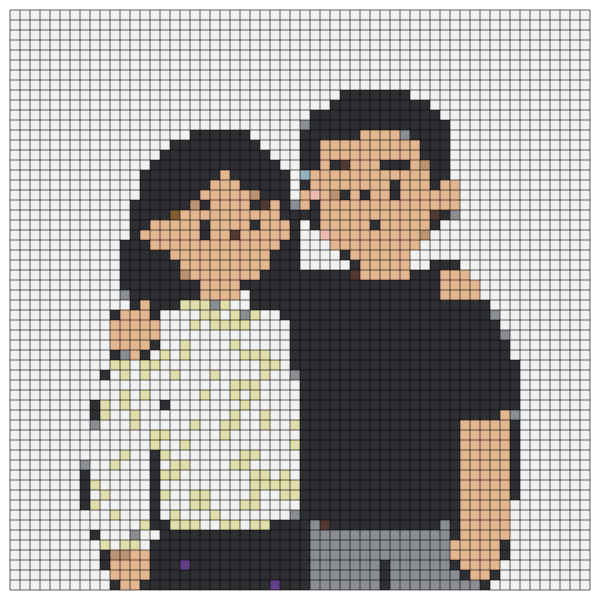 Couple portrait, large grid
Advanced · Perler
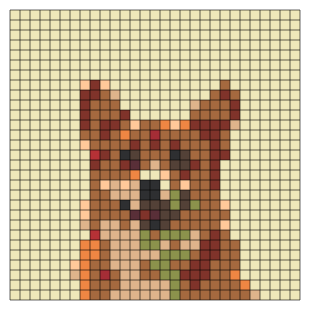 Corgi portrait in Hama colors
Advanced · Hama
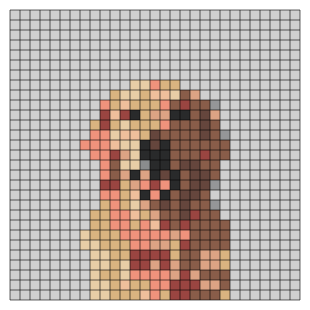 Golden retriever in Artkal colors
Advanced · Artkal
How these charts were made
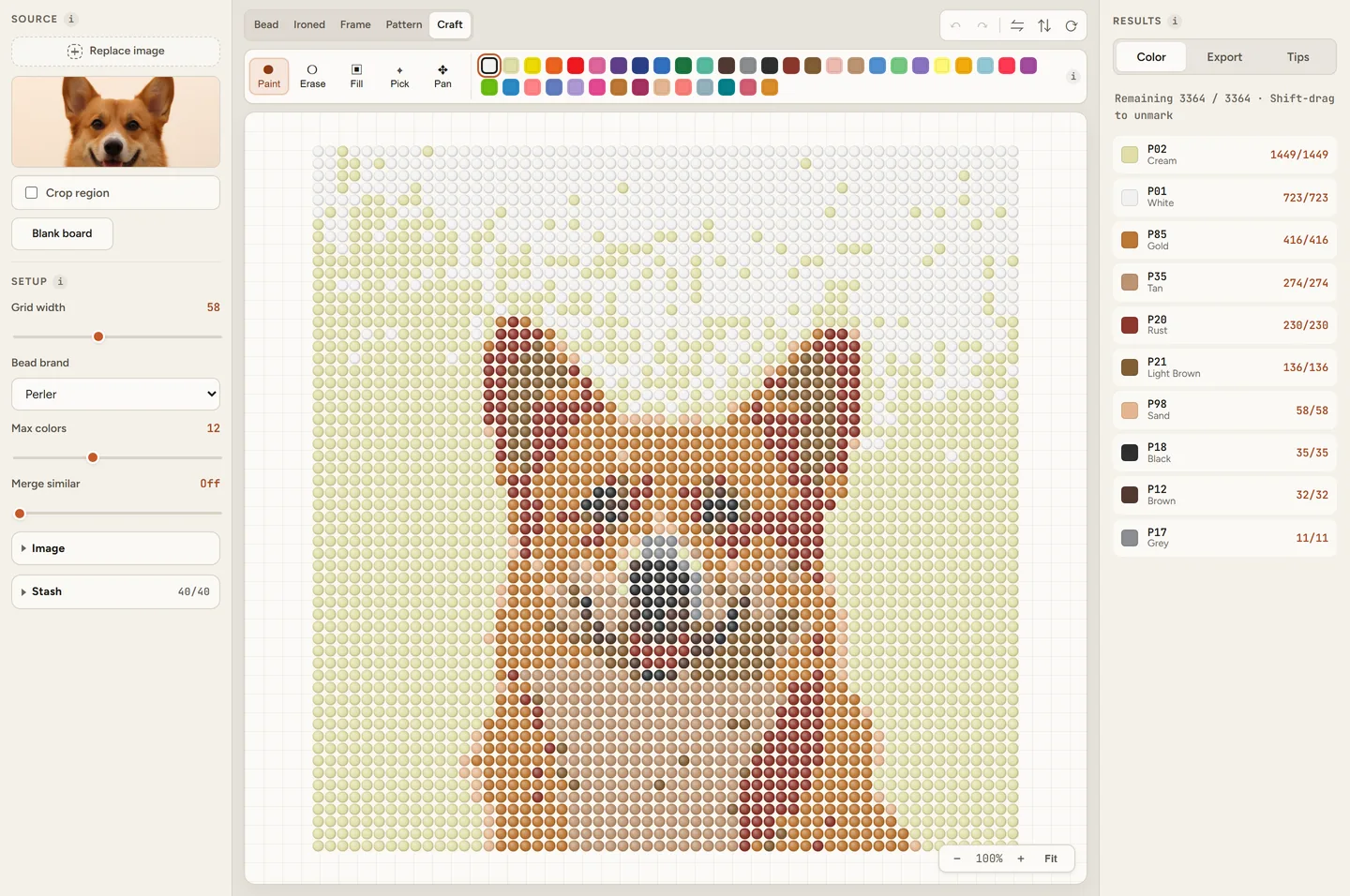
Every pattern on this page came out of the same converter that runs in the Studio. The photo is matched against a real bead color card in CIELAB space, using the CIEDE2000 formula — plain RGB distance collapses on skin tones and pale shadows, which is why so many photo-to-bead tools give you flat, muddy faces. The corgi below is the source photo at 29 beads wide with a 12-color cap.
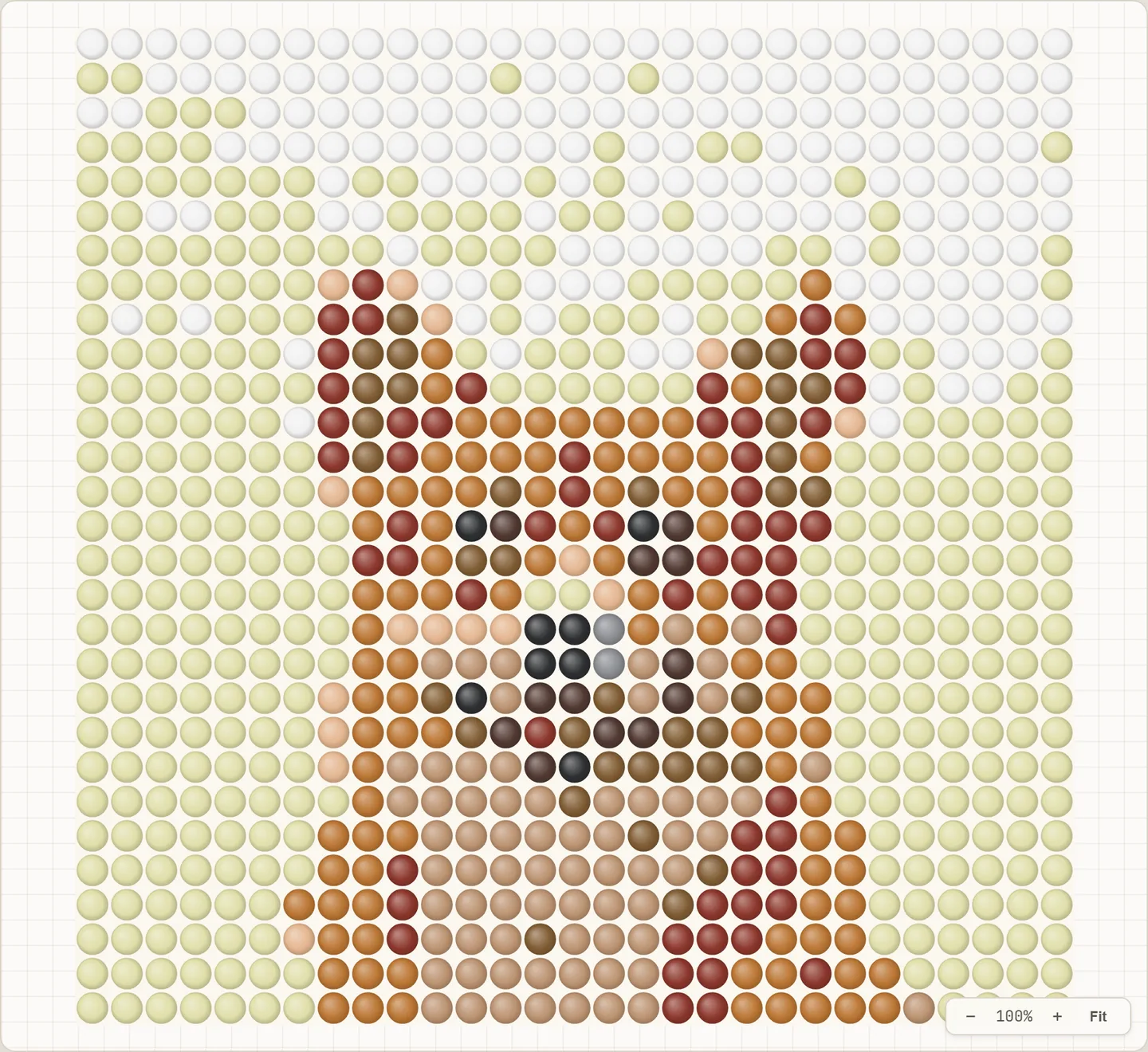
Bead counts come from the chart, not from the board
A 29×29 pegboard has 841 pegs, and a 58×58 layout of four boards has 3,364. Those are ceilings. The photo patterns here fill the grid because the background is converted too, so the count runs close to the ceiling. A pattern drawn from a cut-out subject with the background removed will use noticeably fewer, typically 40 to 70 percent of the available pegs.
Time assumes a steady pace
Estimates here run from 250 to 300 beads an hour, which is roughly what an experienced hand manages with sorted colors and a good pair of tweezers. Sorting your beads first is most of the difference between a relaxed evening and a frustrating one. If this is your first build, cap the session at 90 minutes.
Any 5mm brand works
Perler, Hama, Artkal and MARD all use the same 5mm peg spacing, and their square boards interlock with each other. The codes differ between brands — Perler P01 and Hama H01 are both white but they are not the same white — so match by color, not by code. 2.6mm mini beads need their own smaller boards and cannot be used on a 29×29.
How to build one
- Pick your board. One 29×29 for the single-board patterns, four interlocked for the 58×58 ones. Check the width listed on the pattern page before you buy anything.
- Sort the colors first. Lay each color out in its own pile before you place a single bead. The chart lists the code and count for every color, so you know in advance how many piles to make.
- Place from a corner outward. Start at the top-left and work in rows. Every chart here has the grid orientation fixed, so there is no mirroring to work out.
- Iron carefully. Parchment paper, not wax paper. Medium heat around 150 to 170°C, steam off, slow circles. Check after 10 seconds: the holes should start to close but stay visible. Stop there — a flat closed sheet means too much heat and it does not come back.
- Flip and do the other side. Both sides gives a sturdier piece, which matters for anything that gets handled. Then cool it flat under heavy books for at least 5 minutes.
Questions about these patterns
Are these Perler bead patterns really free?
Yes. Every pattern on this page shows the full bead grid on screen with the color codes and the number of beads each color needs. You do not need to buy anything to look at a pattern. Exporting a pattern to PDF or ZIP is a separate step that is not required to view or build from these charts.
Do I need Perler beads to make these?
No. These charts work with any 5mm fuse bead brand — Perler, Hama, Artkal, MARD, Nabbi, or generic 5mm beads. All 5mm brands share the same peg spacing, so a pattern made for one brand fits the others. The color codes listed are the brand used to generate the chart, and you can switch brands in the Studio to see the same picture in a different color card.
How many beads does each pattern need?
The bead count is listed on every pattern. A full 29×29 board holds 841 beads, so a one-board pattern uses close to that. A 58×58 pattern fills four boards and uses 3,364 beads.
Can I print these patterns?
You can view and print any pattern from your browser. For a printable PDF with per-color shopping lists and an assembly grid you can lay under the pegboard, use the Studio to convert your own photo — that export is a separate paid step, not something you need for these published charts.
What size board do I need?
One-board patterns need a single 29×29 pegboard. The 58×58 patterns need four boards interlocked in a 2×2 layout. Standard Perler, Hama and Artkal boards all interlock with each other, so you can mix brands if you already own some.
Which beads should I buy first?
For a first project, a 24 to 48 color starter set is enough for most one-board designs. Photographs with skin tones and smooth gradients need more — around 72 to 96 colors gives noticeably smoother shading, and 120 or more is where portraits start to look natural.
How long does one of these take to make?
A one-board pattern runs roughly 45 to 90 minutes if you are placing about 250 to 300 beads an hour. The 58×58 versions run several hours. If this is your first build, do one board in a single session and leave the big ones for later.
Can I sell items made from these patterns?
These charts are free to view and build from. Reselling mass-produced copies of the exact pattern artwork is a different matter — the pattern is not a license to reproduce the source photographs.
Before you start: what to buy
Three things trip people up before the first bead goes down. All three have their own guide with the numbers.
5mm vs 2.6mm beads
Two sizes exist and they do not share boards. Which one you buy decides everything downstream.
How many colors
What 72 and 168 colors actually give you, and why fewer colors often produce the better pattern.
Board sizes and bead counts
Every pegboard size from 29×29 to 116×116, what fits on each, and how long each takes.
Want your own photo as a pattern?
These charts were all made with the Beadful Studio converter. Upload any photo and it does the same thing — matches colors to a real bead card, applies dithering where the photo needs it, and gives you the grid plus a per-color shopping list.